
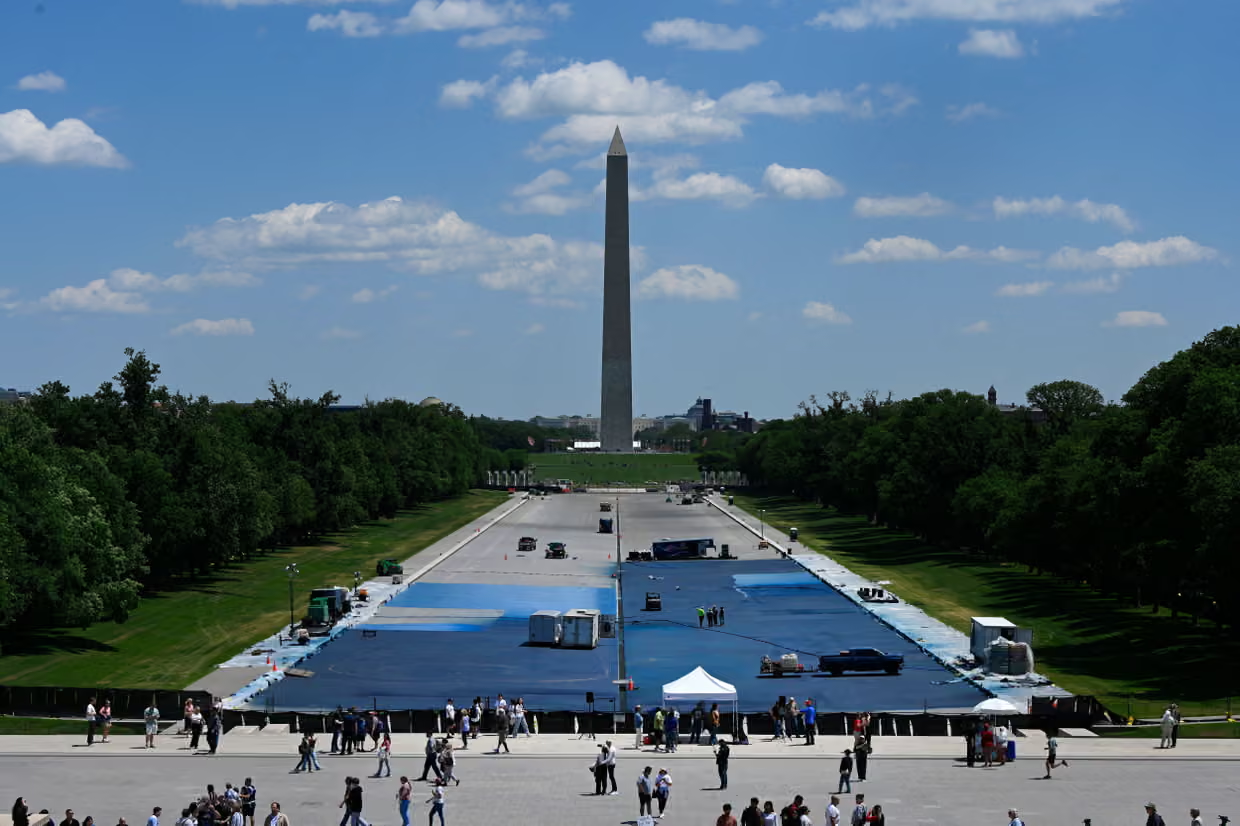
A lawsuit over Donald Trump’s redesign of the Lincoln Memorial reflecting pool is becoming a much larger fight over who controls America’s historic public spaces.
What began as a dispute about a nearly $7 million renovation project could now help determine how far presidents and federal agencies can go when altering nationally protected landmarks tied to national identity, public memory and cultural symbolism.
At the centre of the dispute is a project that would replace the reflecting pool’s long-standing dark gray stone appearance with a bright industrial coating critics say resembles the bottom of a modern swimming pool. Trump has defended the renovation publicly, saying the site looked dirty and failed to represent the country properly.
Now preservation groups are trying to stop the overhaul before construction moves further.
The Cultural Landscape Foundation filed suit against the US Department of the Interior, arguing the project violates the National Historic Preservation Act, the federal law designed to protect historically significant public spaces from major alterations without formal review.
The fight may look cosmetic. It is becoming something much larger, the case may look like another political fight surrounding Trump. Legally, though, the implications could stretch much further.
The lawsuit is beginning to test whether administrations can substantially reshape the visual identity of protected public landmarks once those spaces become politically useful or symbolically important to a president’s image.
That question matters because preservation law does not only protect buildings from demolition. In some cases, it protects the character of a place itself — the appearance, atmosphere and historical intent behind the original design.
According to the lawsuit, the dark reflecting basin was never an incidental feature that could simply be modernised during routine maintenance work. Preservation advocates argue it formed part of the memorial’s entire visual composition from the beginning.
That argument could become central in court.
If judges decide the redesign changes the historical character of the site rather than merely restoring it, the administration may face stricter procedural hurdles under federal preservation law.
The dispute also arrives at a time when battles over public spaces have become increasingly political across the United States.
Conflicts involving monuments, memorial redesigns, statues and historic buildings now regularly evolve into wider arguments about national identity, ideology and cultural control. Decisions that once looked like planning or maintenance issues can rapidly turn into lawsuits, activist campaigns and national political controversies.
Trump’s Washington projects have already triggered similar legal battles.
Other disputes involving golf course redevelopment and plans for a White House ballroom have raised broader questions about executive authority and whether administrations can aggressively pursue symbolic construction projects before receiving clear congressional approval.
The Lincoln Memorial case now risks becoming another test of where courts are willing to draw the line.
Supporters of the renovation argue presidents should not be blocked from improving neglected public spaces, particularly at landmarks visited by millions of tourists every year. Critics see something different: a federally protected memorial being reshaped around modern branding instincts and personal taste.
That is why the case could end up carrying consequences beyond Washington.
If preservation groups succeed, future administrations may face stronger legal resistance when attempting large-scale redesigns of culturally important public sites. Federal agencies could also come under greater pressure to conduct deeper public reviews before altering historic landmarks tied to national symbolism.
The outcome may eventually affect disputes far outside federal politics as well.
Local governments across the country are already facing legal and political battles over redevelopment plans, public memorials, heritage preservation and controversial redesigns of civic spaces. A tougher judicial interpretation of preservation law could influence those fights too.
Behind the politics sits a much bigger question: When does restoring a historic landmark stop being preservation and start becoming political reinvention?
That question is no longer limited to one reflecting pool in Washington.
Courts may now end up deciding how much power modern governments really have to reshape the public spaces that define national history.