
Three Republican-led US states have launched an unprecedented legal challenge seeking to classify the interstate distribution of abortion medication as a “public nuisance”, opening a new front in the legal battle over abortion access and state sovereignty.
Louisiana, Alabama and Arkansas filed two lawsuits on September 30, arguing that healthcare providers who prescribe and mail abortion pills into states with restrictive abortion laws are undermining those states’ ability to enforce their legislation.
The litigation includes a direct constitutional challenge to abortion shield laws and a separate federal lawsuit seeking to hold out-of-state abortion providers liable for allegedly creating a public nuisance.
The states are challenging laws adopted by New York, California and Massachusetts that protect abortion providers from certain legal proceedings initiated in states where abortion is prohibited.
The cases could have significant implications for interstate healthcare, the limits of state jurisdiction and the ability of medical professionals to provide telehealth services across state boundaries.
What Is the Public Nuisance Legal Argument?
Public nuisance law traditionally addresses conduct that unreasonably interferes with rights shared by the public, including threats to public health, safety and the environment.
Historically, the doctrine has been used to address problems such as pollution, obstruction of public roads and other activities affecting communities.
More recently, governments have attempted to extend public nuisance claims to litigation involving tobacco, opioid manufacturers, climate change and other alleged widespread public harms.
Louisiana, Alabama and Arkansas are now seeking to apply the same legal principle to abortion medication distributed across state lines.
In their court filings, the states argue that out-of-state providers are deliberately frustrating abortion restrictions adopted by their legislatures.
They contend that the distribution of abortion medication into their jurisdictions constitutes an interference with public welfare that courts should be able to prevent through injunctions and other remedies.
Public nuisance claims can provide governments with a route to seek remedies for alleged interference with public rights, rather than requiring them to demonstrate injury to a particular individual. However, the states must still establish that the defendants’ conduct satisfies the applicable legal requirements.
The approach is legally significant because the medication involved has been approved by the US Food and Drug Administration (FDA).
The litigation therefore raises questions about whether public nuisance doctrine can be extended to conduct involving federally authorised medication and healthcare services that are lawful in the provider’s home state.
Supreme Court Asked to Review Abortion Shield Laws
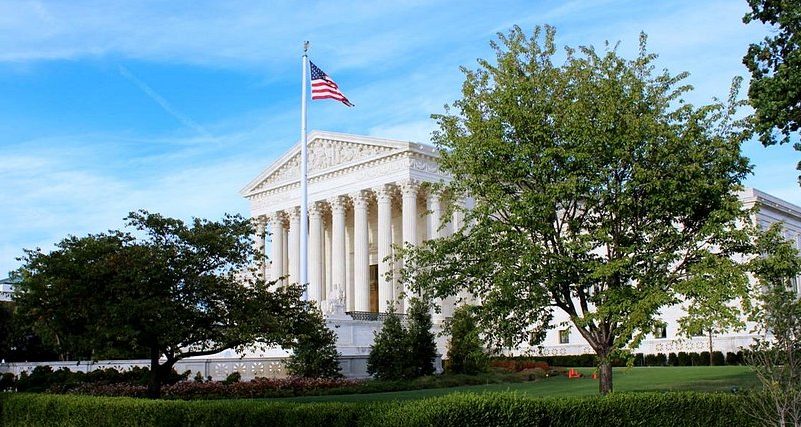
One of the lawsuits was brought directly before the US Supreme Court against New York, California and Massachusetts.
The three defendant states have enacted shield laws intended to protect healthcare professionals who provide reproductive services to patients in other jurisdictions.
These protections can restrict cooperation with out-of-state investigations, limit enforcement of certain judgments and shield providers from legal consequences arising from services permitted under their own state’s laws.
Louisiana, Alabama and Arkansas argue that the legislation interferes with their sovereign authority to enforce abortion restrictions within their borders.
The states’ constitutional arguments invoke the Full Faith and Credit Clause, which governs recognition of certain legal proceedings and judgments across state boundaries, alongside the equal-sovereignty doctrine and the Dormant Commerce Clause.
They also advance a federal common-law public nuisance theory, arguing that the shield laws interfere with their ability to enforce abortion restrictions.
Those arguments are allegations advanced by the plaintiff states and have not been accepted by the Supreme Court.
The dispute raises difficult constitutional questions about federalism, interstate legal cooperation and the extent to which one state must recognise or assist another state’s enforcement activities. Similar questions about the boundaries between state and federal authority have emerged in litigation over the regulation of prediction markets.
The Supreme Court has original jurisdiction over certain disputes between states, allowing cases to be brought directly before it rather than progressing through lower courts.
However, the justices are not required to accept every such dispute, and the Court frequently declines requests to exercise that jurisdiction.
The plaintiff states argue that shield laws interfere with their sovereign authority to enforce abortion restrictions.
New York Attorney General Letitia James rejects that interpretation, maintaining that New York is entitled to protect healthcare professionals providing services lawful under its own legislation.
Massachusetts Attorney General Andrea Joy Campbell has similarly defended her state’s protections for reproductive healthcare providers.
The outcome could help determine how effectively states can protect medical professionals who provide telehealth services to patients living elsewhere.
Second Lawsuit Targets Abortion Providers
The states have also filed a separate lawsuit in federal court in Louisiana against approximately 30 medical practitioners and organisations accused of supplying abortion medication across state lines.
The defendants include healthcare providers and organisations operating in states where abortion remains legal.
The lawsuit combines public nuisance allegations with other legal claims and seeks to prevent the continued distribution of abortion medication into states with restrictive laws.
The states also allege that some defendants made misleading representations concerning abortion medication. Those allegations have not been established by a court.
The lawsuit asks the federal court to declare the defendants’ alleged conduct a public nuisance and seeks injunctions, damages, civil penalties, statutory damages, attorneys’ fees and costs.
Among the organisations named are A Safe Choice Network and Cambridge Reproductive Health Consultants.
The defendants had not provided responses to Reuters’ requests for comment when its report was published.
The case could test whether states can obtain court orders restricting medical services provided by professionals operating outside their territorial boundaries.
It also raises questions about potential conflicts between state abortion prohibitions, federal drug regulation and the legal protections available to healthcare providers.
Telehealth Abortion Access Drives Legal Dispute
The litigation follows a substantial increase in the use of telehealth services to obtain abortion medication following the Supreme Court’s 2022 decision in Dobbs v. Jackson Women’s Health Organization.
That ruling overturned Roe v. Wade, ending the federal constitutional right to abortion previously recognised by the Court.
Nearly half of US states subsequently introduced or maintained bans or significant restrictions on abortion.
Patients in those jurisdictions have increasingly relied on travelling to other states or obtaining medication through telehealth consultations.
According to the Guttmacher Institute, approximately 91,000 abortions were provided through telehealth to patients in states with total abortion bans during 2025, compared with around 74,000 in 2024.
Over the same period, the number of people travelling across state lines for abortion care declined from approximately 154,000 to 142,000, according to Guttmacher estimates.
The figures illustrate the growing importance of telehealth in the legal disputes surrounding interstate abortion access. The legal scrutiny of remote healthcare services extends beyond reproductive medicine, with a recent $36.4 million False Claims Act settlement involving allegations concerning telemedicine providers and fraudulent medical orders.
Medication abortion generally involves two drugs, mifepristone and misoprostol, which are commonly used together during early pregnancy.
Mifepristone was first approved by the FDA in 2000, and federal regulators have subsequently expanded access, including permitting qualifying prescriptions through telehealth and dispensing by mail.
The FDA and major medical organisations have repeatedly concluded that mifepristone is safe and effective when used as directed, with serious adverse events considered rare.
Nevertheless, abortion opponents have continued challenging federal approval decisions and rules governing access to the medication.
The latest public nuisance lawsuits introduce a different approach by focusing on the relationship between state abortion restrictions and the legal protections provided by other states.
Could Public Nuisance Claims Reshape Interstate Healthcare Law?
The legal significance of the cases extends beyond abortion regulation.
At their centre is a dispute over whether states can use civil litigation to prevent healthcare providers in other jurisdictions from delivering services that are lawful where those providers operate.
If courts accept the public nuisance theory advanced by Louisiana, Alabama and Arkansas, it could provide states with another legal mechanism for challenging activities that conflict with their domestic legislation.
However, the claims face unresolved questions concerning jurisdiction, the scope of public nuisance doctrine, interstate commerce and the constitutional relationship between states. The relationship between federal law and state-level civil claims is also being examined in the Supreme Court’s ongoing climate litigation involving Suncor and ExxonMobil.
The litigation also presents an important test for shield laws, which have become a central feature of the legal response to differing abortion policies across the United States.
For healthcare lawyers, constitutional specialists and medical providers, the cases could help clarify the boundaries between state sovereignty, interstate medical practice and federal regulation.
Ultimately, the litigation raises a question that has become increasingly important since Dobbs: how far can a state’s authority extend when its residents obtain medication or medical services from providers operating legally in another jurisdiction?
The Supreme Court and federal courts may now be asked to begin defining those boundaries.