
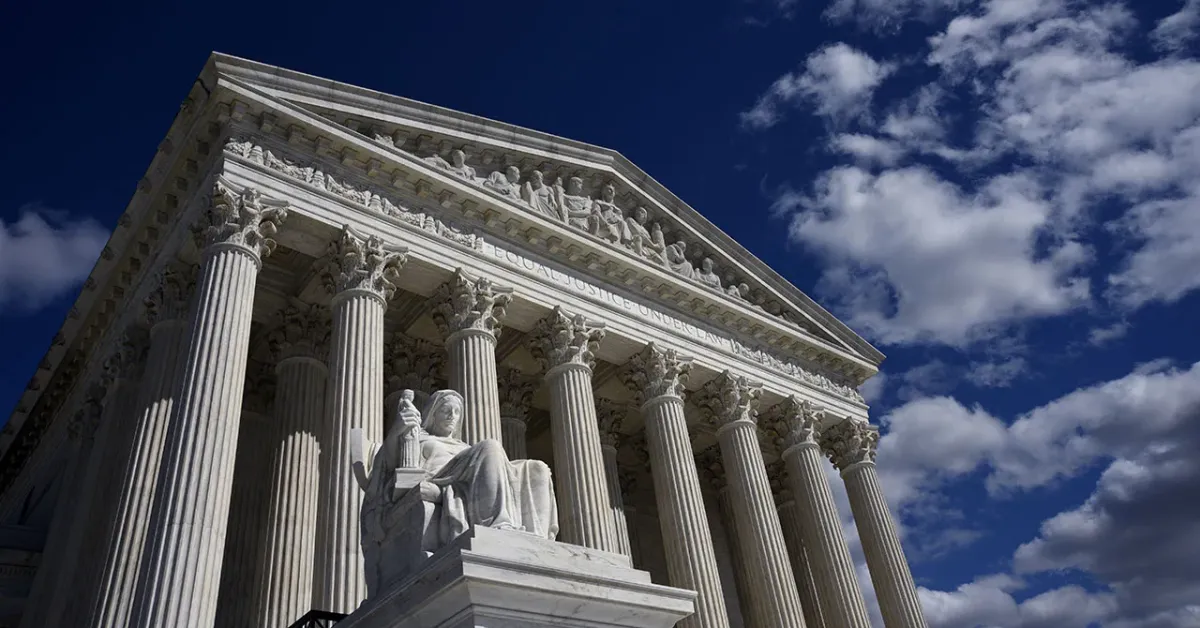
The US Supreme Court has heard arguments in Suncor Energy and ExxonMobil’s challenge to a Colorado climate lawsuit, in a case that could affect similar state-law claims brought against fossil-fuel companies across the United States.
The case, Suncor Energy (U.S.A.) Inc. v. County Commissioners of Boulder County, No. 25-170, reached the Supreme Court after the Colorado Supreme Court allowed claims brought by Boulder County and the City of Boulder to proceed. The justices heard oral argument on October 5 after granting review on February 23, 2026. They also directed the parties to address whether the Court has statutory and Court Allows SpaceX South Texas Land Exchange | Lawyer Monthly to hear the dispute.
Boulder alleges that the companies’ production, promotion and sale of fossil fuels contributed to greenhouse-gas emissions and climate-related harm affecting local property and residents. Its complaint asserts five Colorado common-law claims: public nuisance, private nuisance, trespass, unjust enrichment and civil conspiracy.
Suncor and ExxonMobil argue that federal law prevents Colorado from applying its own tort law to claims based on the effects of interstate and international greenhouse-gas emissions. The petitioners contend that the Constitution, federal common law and the Steri-Tech Agrees $700,000 Clean Air Act Settlement | Lawyer Monthly preclude liability of this kind where the alleged conduct and resulting emissions extend far beyond one state.
The question formally before the Court is whether federal law precludes state-law claims seeking relief for injuries allegedly caused by the effects of interstate and international greenhouse-gas emissions on the global climate. The justices are therefore considering a threshold question about the availability of state-law climate litigation rather than whether Suncor or ExxonMobil is liable for Boulder’s alleged losses.
The United States is supporting the petitioners. In its Supreme Court brief, the federal government argued that the dispute concerns the application of one state’s law to fossil-fuel companies’ worldwide activities and said it has an interest in the proper interpretation of the constitutional and statutory provisions involved.
Davis Polk & Wardwell partner Kannon Shanmugam is counsel of record for Suncor Energy and the other petitioners. Kevin Russell of Russell & Woofter is counsel of record for Boulder County and the other respondents, giving the case direct law-firm monitoring value alongside its broader significance for climate litigation.
Boulder’s position is that its claims are conventional state-law tort claims and are not pre-empted simply because they concern climate-related harm. Filings supporting the respondents distinguish claims based on alleged deceptive marketing and other commercial conduct from direct attempts to regulate interstate air pollution.
The outcome could have consequences well beyond Colorado. State and local governments have brought Michigan Climate Antitrust Case Against Oil Majors Dismissed | Lawyer Monthly and a ruling that federal law precludes Boulder’s claims could restrict one of the main legal routes currently being used to pursue climate-related damages.
A ruling for Boulder, by contrast, would leave state courts with a larger role in determining whether traditional tort principles can be applied to alleged climate harms connected with global fossil-fuel activity.
For disputes lawyers and in-house legal teams, the judgment is likely to become an important authority on federal pre-emption, state tort law and climate litigation. The Court’s decision will also help define how far state-law claims can reach when the alleged conduct and resulting harm cross state and national borders.